Online ads promise quick visibility, instant leads, and rapid growth.
For many small business owners, they seem like the fastest way to compete with bigger brands.
Yet the reality is harsh. Why Small Businesses Fail With Online Ads
A large number of small businesses try Google Ads or social media ads, spend money for a few weeks, see disappointing results, and conclude:
“Online ads don’t work for my business.”
The truth is more nuanced.
Online ads do work — but not in the way many small businesses expect or execute them.
This article explores why small businesses often fail with online ads, focusing on three critical areas: targeting, landing pages, and expectations.
The Small Business Reality With Online Ads
Small businesses don’t fail because they lack effort.
They fail because online advertising operates on systems that are rarely explained clearly.
Unlike large companies, small businesses:
- Have limited budgets
- Can’t afford long learning curves
- Often manage ads themselves
- Expect immediate returns
When ads are treated as a shortcut instead of a process, disappointment follows quickly.
Let’s break down where things usually go wrong.
1. Poor Targeting: Reaching the Wrong People
“More Reach” Is Not the Same as “Right Reach”
“Why Small Businesses Fail With Online Ads”
One of the biggest mistakes small businesses make is believing that more visibility equals more customers.
So they:
- Target broad locations
- Use generic interests
- Select wide age groups
- Choose “maximize reach” options
The result?
Their ads are shown to people who can see the business but have no intent to buy.
Targeting Without Understanding the Customer
Many small business owners skip the most important step:
defining who the ideal customer actually is.
They ask:
- “Why isn’t my ad working?”
Instead of: - “Who exactly should this ad reach?”
Without clarity on:
- Customer problems
- Buying intent
- Search behavior
- Decision-making stage
ads become guesses, not strategies.
Platform Algorithms Need Signals
Ad platforms don’t magically understand your business.
When targeting is vague:
- Algorithms struggle to optimize
- Ads burn budget on unqualified clicks
- Cost per lead increases
Small businesses often stop ads before platforms even gather enough data to improve performance.
2. Sending Traffic to the Wrong Place (Landing Page Problem)
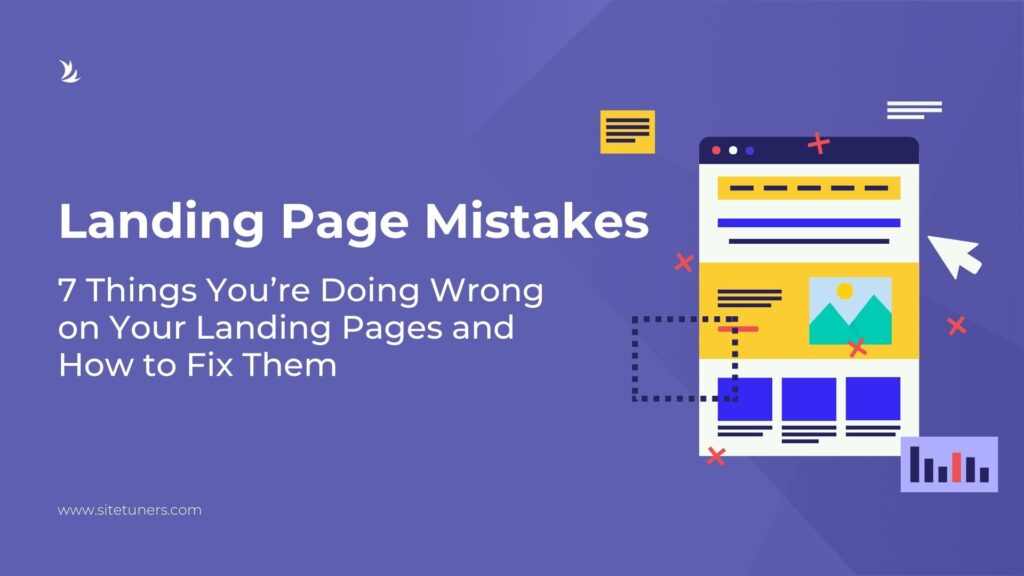
Ads Don’t Sell — Pages Do
A common misconception is that the ad itself should convert users.
In reality:
- Ads attract attention
- Landing pages close the deal
Many small businesses send ad traffic to:
- Their homepage
- A cluttered services page
- A slow-loading website
- A page with no clear call-to-action
Even well-targeted ads fail when visitors don’t know what to do next.
Mismatch Between Ad Promise and Page Content
Imagine clicking an ad that says:
Why Small Businesses Fail With Online Ads
But landing on a page that:
- Talks about company history
- Lists 10 services
- Has no pricing clarity
- Buries the contact form
This disconnect kills conversions.
Small businesses often focus on getting clicks, not guiding decisions.
Trust Is Missing on Many Landing Pages
Small business ads usually target people who are:
- Seeing the brand for the first time
- Slightly skeptical
- Comparing multiple options
If landing pages lack:
- Testimonials
- Clear benefits
- Simple explanations
- Visual clarity
users leave without taking action — even if they were interested.
Why Small Businesses Fail With Online Ads
Ads Are Not Instant Profit Machines
Many small businesses expect:
Why Small Businesses Fail With Online Ads
- Immediate sales
- Guaranteed leads
- Low costs from day one
This mindset comes from:
- YouTube ads promising “10x growth”
- Influencers selling shortcuts
- Misleading success stories
In reality, ads require:
- Testing
- Optimization
- Data learning
- Time
When results don’t appear in the first few days, ads are often stopped prematurely.
Confusing Marketing With Sales Closure
Online ads bring opportunities, not instant customers.
Small businesses sometimes forget:
- Leads need follow-up
- Calls need proper handling
- Messages need timely replies
Ads may generate interest, but poor sales processes make it look like ads failed.
The problem isn’t always traffic — it’s what happens after the click.
Expecting One Campaign to Solve Everything
Another common mistake is running:
- One ad
- For one offer
- For a short time
and expecting it to transform the business.
Successful online advertising is iterative:
- Multiple creatives
- Different audiences
- Various messages
- Continuous improvement
Small businesses that treat ads as a one-time experiment rarely see success.
4. Budget Misalignment: Too Small or Poorly Allocated
Testing Requires Breathing Room
Why Small Businesses Fail With Online Ads
With very limited budgets, small businesses often:
- Spread money across too many campaigns
- Test too many audiences at once
- Pause ads before meaningful data appears
This leads to incomplete insights and wasted spend.
Even modest budgets can work — but only when focused.
Spending Without Tracking Results Properly
Many small businesses run ads without:
- Conversion tracking
- Proper goals
- Clear KPIs
They judge performance based on:
- Likes
- Clicks
- Impressions
instead of actual outcomes like:
- Leads
- Calls
- Sales
A lack of tracking removes visibility into which efforts deliver results and which ones waste budget.
5. Lack of Consistency and Patience
Ads Need Time to Learn
Why Small Businesses Fail With Online Ads
Ad platforms improve performance over time by learning from:
- Click behavior
- Conversions
- User engagement
Stopping and restarting ads frequently resets this learning.
Small businesses often quit just when optimization begins.
Inconsistent Messaging Confuses Audiences
Running ads with:
- Different offers every week
- Mixed messaging
- Unclear brand voice
confuses potential customers.
Consistency builds familiarity — and familiarity builds trust.
What Successful Small Businesses Do Differently
Small businesses that succeed with online ads usually:
- Define a clear target audience
- Use focused, simple landing pages
- Set realistic expectations
- Track meaningful actions
- Commit to testing and learning
They see ads as part of a system, not a magic button.
Final Thoughts: Ads Don’t Fail — Systems Do
Online ads are powerful tools.
But tools only work when used correctly.
Why Small Businesses Fail With Online Ads
Small businesses don’t fail with ads because they’re bad at marketing.
They fail because ads are often run without strategy, structure, and patience.
When targeting is clear, landing pages are purposeful, and expectations are realistic, online ads become not an expense — but a scalable growth channel.