How a Digital Marketing Agency Thinks Before Any Campaign Starts
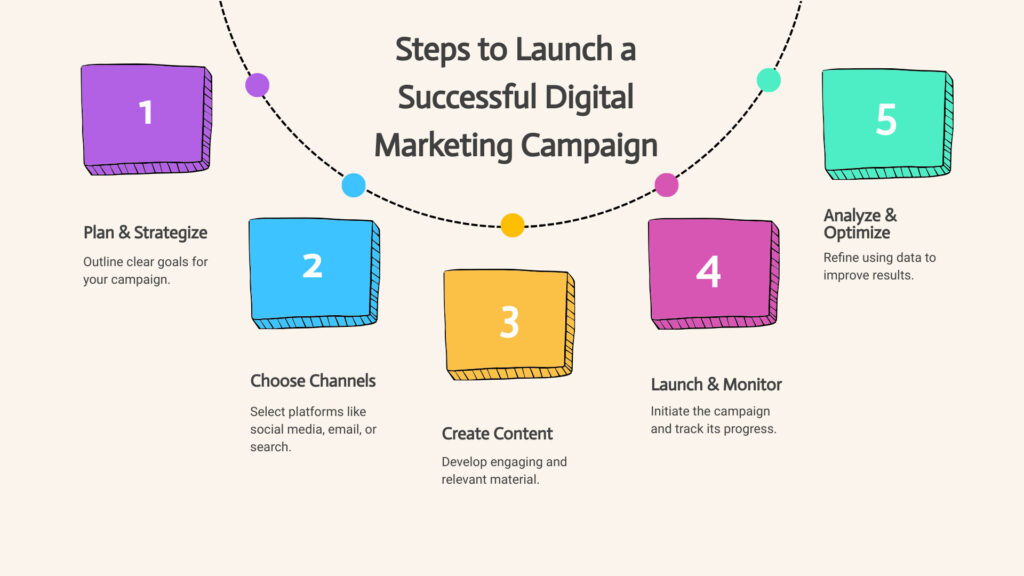
Most people believe digital marketing agency strategy compaign begin with ads, creatives, or keywords.
They don’t.
For a professional digital marketing agency, a campaign actually starts long before anything goes live.
It begins with questions, clarity, and intent — not platforms or budgets.
This thinking process is what separates campaigns that look busy from campaigns that deliver results.
In this blog, we’ll walk through how a digital marketing agency thinks before launching any campaign, focusing on mindset, planning, and strategic intent — without talking about tools or tactics.
Campaigns Don’t Start With “What Should We Run?”
They Start With “Why Are We Running This?”
One of the first mistakes businesses make is jumping straight to execution.
They ask:
- Should we run Google Ads or social media ads?
- Should we focus on SEO or paid campaigns?
- Should we promote offers or brand awareness?
A digital marketing agency pauses here.
Before answering what to do, the agency wants to understand why anything should be done at all.
Because without clarity of purpose, even the best execution becomes noise.
Step 1: Understanding the Real Business Goal (Not the Surface One)
Businesses often describe goals like:
- “We want more leads”
- “We want more traffic”
- “We want more sales”
A digital marketing agency strategy listens — but doesn’t stop there.
Instead, it asks deeper questions:
- What kind of leads are valuable?
- What does a successful sale actually look like?
- What business problem needs to be solved right now?
Sometimes the real goal is:
- Reducing dependency on referrals
- Filling slow seasons
- Improving lead quality
- Building predictable revenue
Campaigns are shaped around business outcomes, not vanity metrics.
Step 2: Clarifying Who the Campaign Is Not For
One of the most important strategic decisions happens early — and it’s often overlooked.
digital marketing agency strategy actively defines:
“Who should this campaign exclude?”
When messaging is too broad, it rarely resonates with anyone in a meaningful way.
Before any campaign starts, agencies think about:
- Who is not ready to buy?
- Who is price-shopping only?
- Who is outside the service scope?
- Who would waste budget if targeted?
Clarity comes from focus — not reach.
Step 3: Understanding User Intent Before Any Messaging
A campaign doesn’t exist in isolation.
It enters the customer’s world at a specific moment.
A digital marketing agency strategy asks:
- What immediate challenge is the user looking to address at this moment?
- Are they exploring, comparing, or ready to decide?
- What confusion do they already have?
- What hesitation might stop them from taking action?
Intent shapes everything:
- The message tone
- The promise made
- The next step offered
Ignoring intent leads to campaigns that feel intrusive or irrelevant.
Step 4: Defining the One Action That Truly Matters
Before launching anything, agencies simplify.
They ask:
If this campaign leads to just one action, which outcome actually matters most?
Not:
- Visit the website and
- Read multiple pages and
- Follow on social media and
- Fill a form
But one clear action.
digital marketing agency strategy campaigns reduce friction by removing unnecessary choices.
Focus creates momentum.
Step 5: Aligning Campaign Goals With Business Capacity
This is where many campaigns quietly fail — before they even start.
digital marketing agency strategy evaluates:
- Can the business handle increased inquiries?
- Is follow-up fast and consistent?
- Are expectations aligned with internal processes?
More leads don’t help if:
- Calls go unanswered
- Messages are delayed
- Sales conversations are unclear
Campaign planning includes operational reality, not just marketing ambition.
Step 6: Understanding the Brand’s True Position
Before any messaging is written, agencies study how the brand actually appears — not how it wants to appear.
They consider:
- Is the brand premium or budget?
- Is trust already established or still growing?
- Is differentiation clear or confusing?
- Is the tone formal, friendly, or educational?
Campaigns don’t create brand identity — they amplify what already exists.
A mismatch between promise and perception damages credibility.
Step 7: Planning Consistency Before Creativity
Creativity is important — but it’s never the starting point.
A digital marketing agency prioritizes:
- Message consistency
- Visual continuity
- Tone alignment
- Long-term coherence
One viral post doesn’t build trust.
Repeated clarity does.
Campaigns are planned as systems, not isolated ideas.
Step 8: Deciding What Success Will Actually Mean
Before launch, agencies define success clearly.
Not vaguely:
- “More engagement”
- “Better visibility”
But specifically:
- What change should we see?
- Over what period of time?
- At what quality level?
- Compared to what baseline?
Without a defined success framework, campaigns are judged emotionally instead of strategically.
Step 9: Accounting for Learning, Not Just Results
Strong agencies don’t expect perfection from the first attempt.
They plan for:
- Testing assumptions
- Observing behavior
- Learning patterns
- Refining messaging
A campaign is treated as a learning phase, not a final verdict.
This mindset prevents premature failure.
Step 10: Simplifying the Experience for the End User
Before launch, agencies step into the user’s shoes.
They ask:
- Is this easy to understand?
- Is the message clear within seconds?
- Is the next step obvious?
- Does this feel helpful or pushy?
Campaigns succeed when users feel guided — not pressured.
Step 11: Thinking Long-Term, Even for Short Campaigns
Even short campaigns affect long-term perception.
A digital marketing agency considers:
- How will this campaign shape brand memory?
- Will this attract the right type of audience?
- Does this align with future positioning?
Short-term wins that damage long-term trust are avoided.
Step 12: Removing Assumptions Before They Become Costs
Before launch, agencies challenge assumptions like:
- “People already know us”
- “Our offer is obvious”
- “Price isn’t an issue”
- “This worked before, so it will work again”
Assumptions are tested mentally before they’re tested with budget.
Why This Thinking Matters More Than Tactics
Tools change.
Platforms evolve.
Algorithms shift.
But strategic thinking remains stable.
A digital marketing agency doesn’t succeed because it knows more tools.
It succeeds because it asks better questions before taking action.
Campaigns that perform well are usually calm, clear, and intentional — not rushed or reactive.
Final Thoughts: Strategy Is the Real Campaign
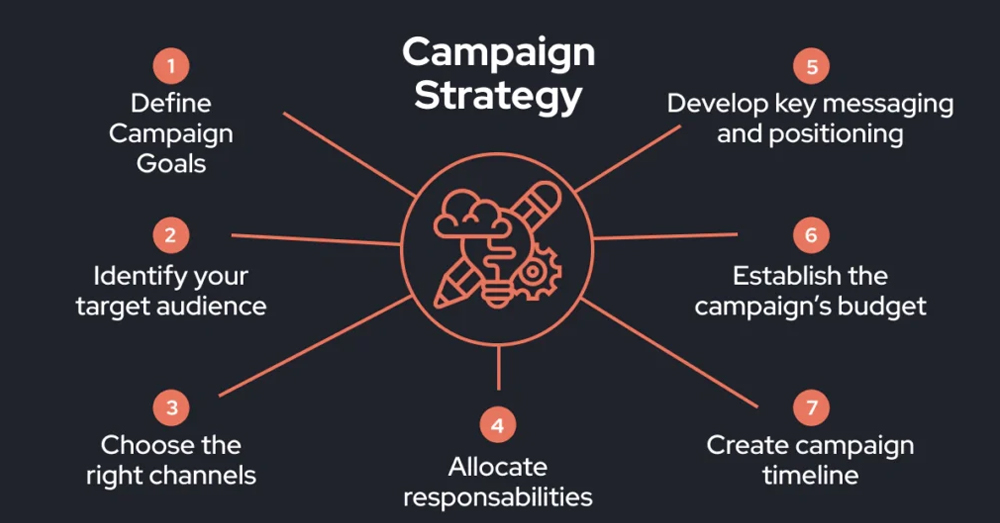
By the time a campaign becomes visible to the public,
most of the important work has already happened.
Behind every effective campaign is:
- Clarity before action
- Intent before messaging
- Planning before promotion
A digital marketing agency doesn’t chase trends.
It builds direction.
And that direction is what turns campaigns into consistent growth.